Not all postcards show picturesque landscapes or sunny beaches. Sometimes they present one with good old forest combine in Ukraine – at least when it comes to Soviet postcards. Industrial sights were deemed as an important propaganda tool in the state-led tourism of the Soviet Union already in the 1920s, and later the were integrated as a normal part of practically all the package tours. Factories, dams, sawmills etc. were supposed to prove the rapid industrial development of the Soviet Union for its citizens. So of course they also appeared in postcards. Here is one card from the series presenting Ukraine. Other themes include, for example, big cities, hiking in the forest, and the Black Sea coast. Forest combine with frozen logs, smoking crane and dirty snow is natural continuation of these.
It is probable that the graphic artist of Intourist was heavily drunk when he designed this instructive illustration. Approaching the end of the 20th century, Soviet tourism became more and more liberated. Especially foreign travellers could go for relaxing vacation and not get force-fed with socialism and factory tours. Alongside holidays, the aesthetics of tourist brochures was also liberated – sometimes too much. Here is a page from Intourist booklet presenting Black Sea towns to Finnish audience. As the title declares, the image shows the flight routes from important Soviet cities to Yalta, Sukhumi etc. But the graph is so extravagant, that it doesn’t really give any information about the routes. This reveals the true intention behind the illustration: it wanted to tell the reader how modern and advanced the Soviet Union is with dozens of flight routes and millions of holiday-makers.
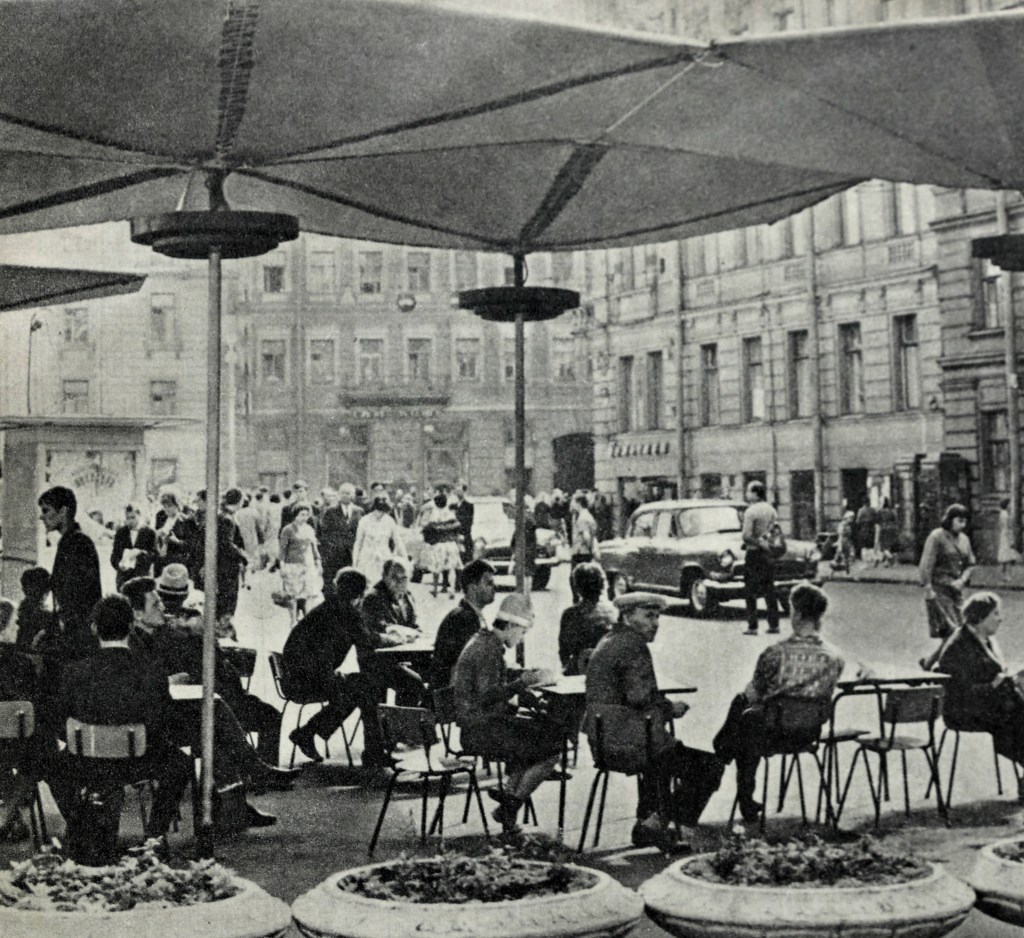
Tourism in the Soviet Union wast gradually westernized from 1970s onward, and even Russian language guide books would now add few photos of unproductive leisure and innocent fun alongside all the factories, kolkhozes, Lenin statues etc. one definetely had to see to be a good tourist. Here is an illustration from a brochure presenting Leningrad to Soviet travelers. The image highlights, that there were European style terrace cafes in the Soviet Union, especially in the “most western city” of the country, as Leningrad was called.
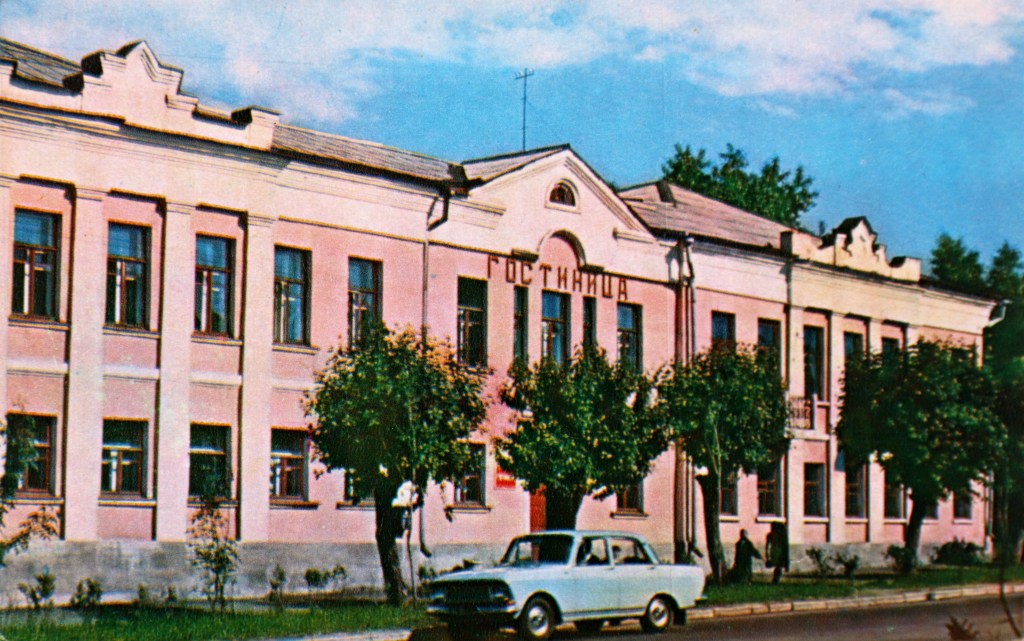
What is often remembered from Soviet tourism are the gigantic Intourist hotels in the bigger cities – especially as many of them are still standing and in use. But in smaller towns, where tourism was not exactly blooming, the hotels were more compact and adapted into existing buildings. Here is the city hotel of Rzhev, town situated in the western part of Russia between Moscow and Latvian capital Riga. There was no special attractions in Rzhev at Soviet era – it was a medieval city, but the old buildings were wiped out in the World War II. So small hotel was quite enough to serve the travellers passing by. Nevertheless, it was immortalized in one of the postcards from the postcard series of Rzhev.
Not everything worked in Soviet tourism, but one thing did – the trains, especially night trains. The Soviet Union was a huge country, and journeys could take days, so sleepers were designed to perfection. There were different classes from open sleeper (so called “platzkart”) to 4-person compartment, and the best was 1st class 2-person compartment, depicted here in the illustration of a Soviet travel brochure from the 1970s. Soviet citizens were used to trains and knew how to conduct themselves, but foreign people didn’t know the small tricks of the trade. One peculiarity was that in Soviet trains male and female passengers were put together without any separation, so one had to know how to act decently. For this reason, though, the night train was also a place for secret erotic encounters.
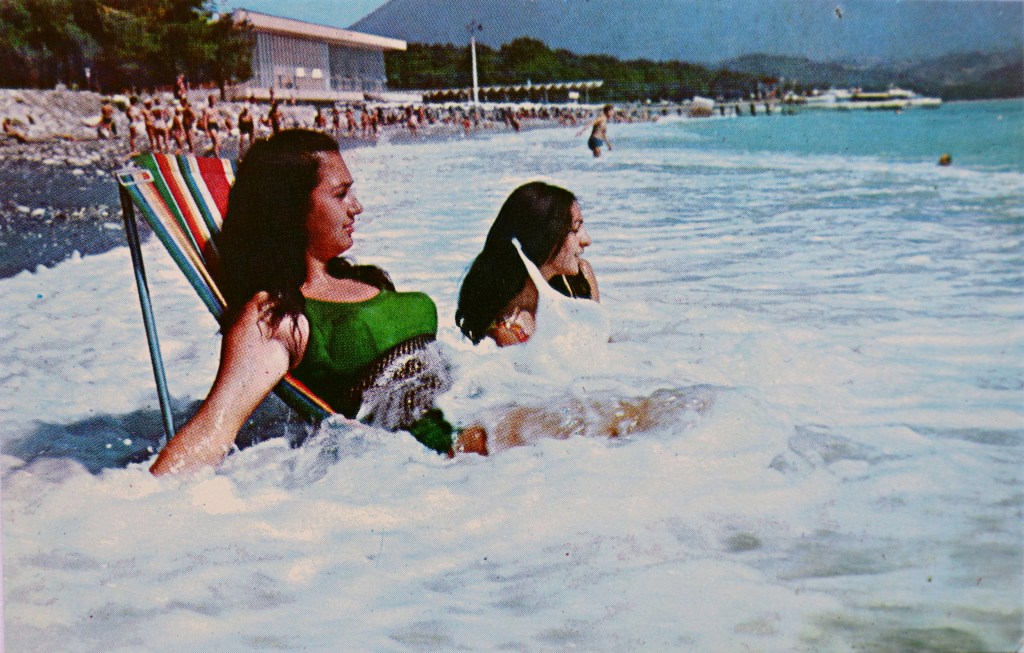
According to famous quote, “there is no sex in the Soviet Union”. But Soviet postcards seem to indicate otherwise, or at least some of them got pretty daring during the last few decades. Soviet leisure tourism was gradually liberalized and westernized from the 1960s onwards, and even the state produced postcard series got few relaxed postcards among all the Lenin statues and pompous buildings. Here is a postcard from 1970s depicting almost erotic beach life at Pitsunda in the Abkhazian coast of the Black Sea. This kind of imagery, so familiar to western tourists from holiday postcards, was quite exceptional in the Soviet Union.
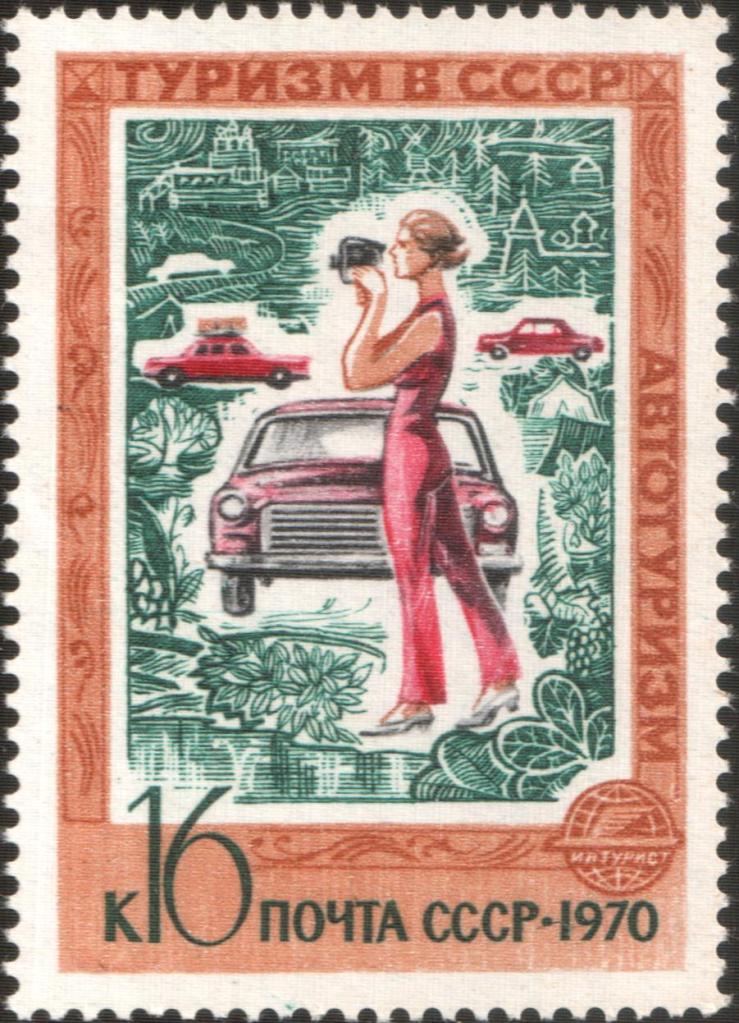
In the 1970s tourism was already a big business in the Soviet Union. It was promoted as a leisure activity that indicated freedom and equality. Of course, real freedom and equality were still mostly lacking in the Soviet Union – and that’s exactly the reason they had to be advertised. Here is as stamp from the series “Foreign Tourism in the Soviet Union”. It might initially feel weird that stamps promoting foreign tourism were published for Soviet citizens and in Russian language, but when seen as propaganda, it isn’t that weird. State wanted comrades to think, that Soviet Union is an open country, where foreign tourists can come and drive around everywhere (as indicated by the beautifully carved landscapes at the background) and take photos – all activities that were restricted for foreigners. Stamps with wide circulation were good means of spreading this false image.
Some attractions in the Soviet Union were excessively political, to the point of being comical. The so-called “Lenin’s haystack” is one of them. Just before revolution Bolshevik leader V. I. Lenin went hiding. One of his refuges was a peasant hut and nearby haystack at Razliv, some twenty kilometres west from St. Peterburg. After the revolution and especially Lenin’s death in 1924, the symbolic importance of the hut – and the haystack – was realized. The hut was museumized already in 1920s, and later a granite memorial was erected there, and even the haystack was reconstructed. In the end of the 1960s the place had become a proper tourist attraction with a brand new museum building, the replica of the haystack, nice forest paths and even a pier for passenger boats. Of course the “Hut of V. I. Lenina at Razliv”, as it was officially called, was featured in postcards, too. Here is a postcard from the end of the 1960s where one can see the haystack and the granite memorial – with Lenin’s name written on the top in gilded letters. And the best part? Yes, it’s still there.
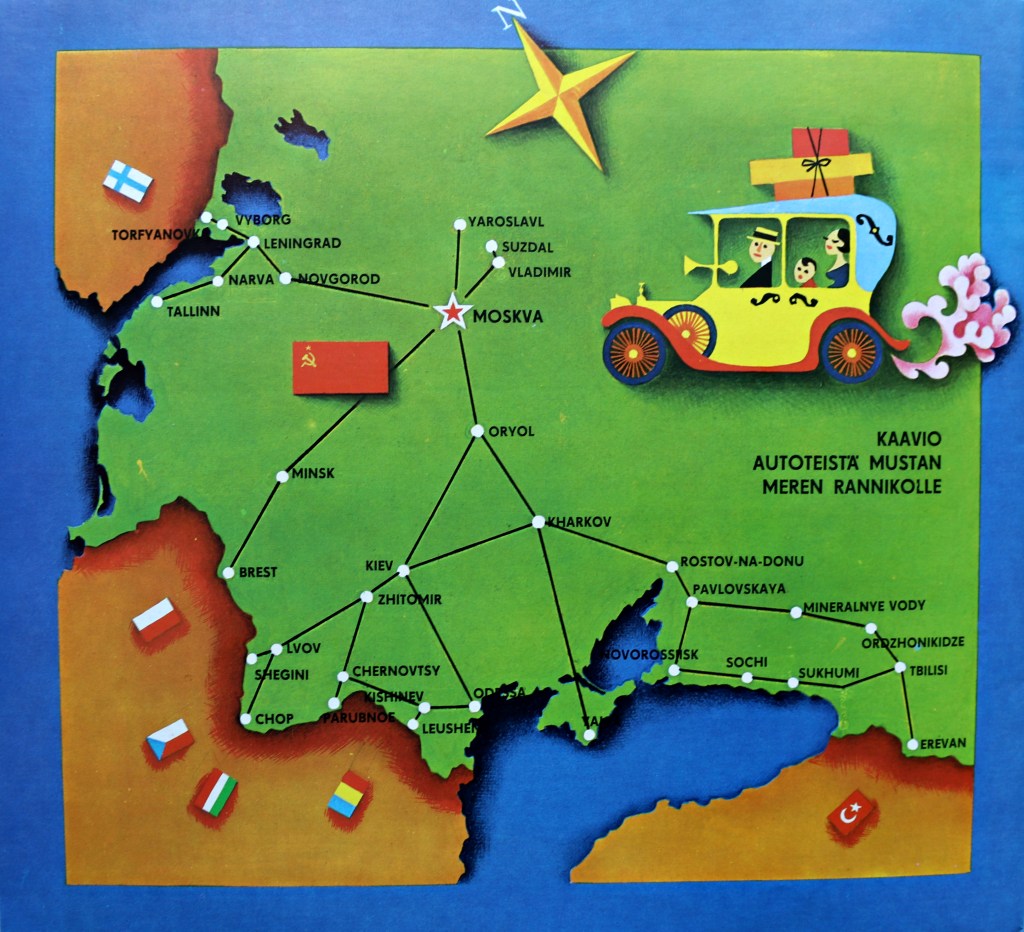
Yes, one could travel from foreign countries to the Soviet Union with private car, especially from the 1970s onward. There was a catch, though: only few main highways were allowed to auto tourists, and the Soviet traffic police GAI had checkpoints, where they monitored that cars continued the journey and didn’t deviate from the route. Moreover, the law allowed you to drive only 500 km. per day, and you had to book accommodation beforehand. So basically your road trip began to resemble a train journey with a private compartment. In this brochure one finds the routes availabe to Finnish tourists. Although there were not that many roads, the distances were huge. From the Finnish border to Crimea one had to drive 2500 km., and to Yerevan, Armenia, it’s over 3500 km. The worst thing was that you had to drive back home via the same road.
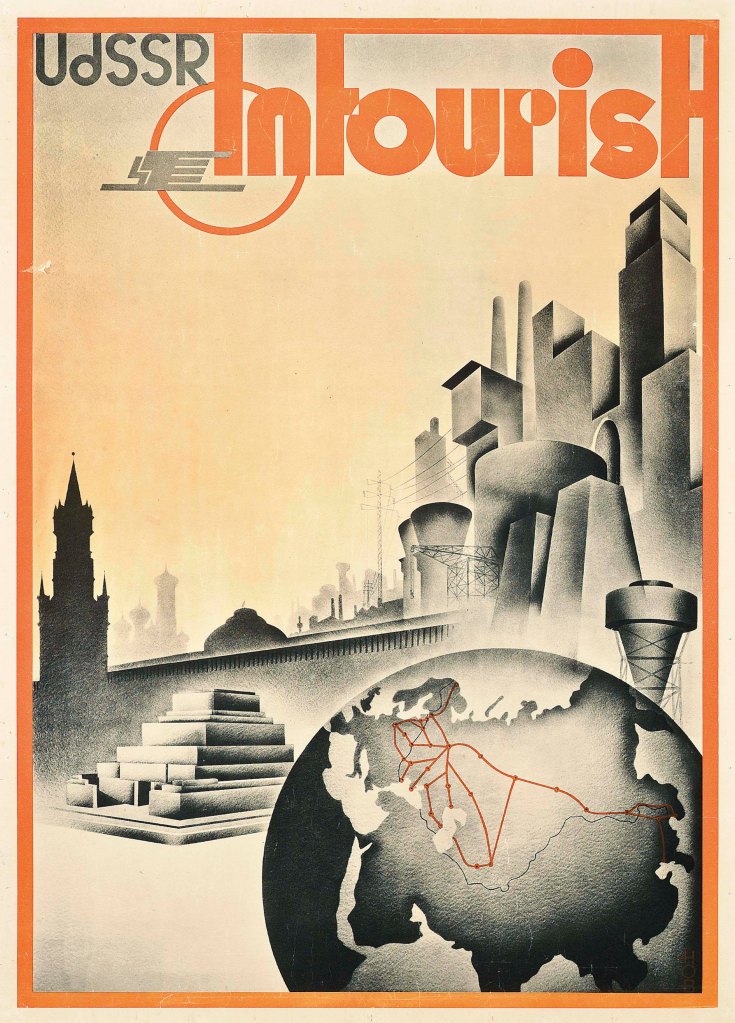
Soviet travel bureau for foreign tourists, Intourist, was established in 1929. In the 1930s it began extensive advertising campaign in many countries, especially in the United States. Intourist posters were designed by the best artists and influenced by the constuctivist aesthetics of the 1920s. In this poster, which is not promoting a single destination but the Intourist itself, one can see what the early Soviet Union wanted to highlight for travelers. Progress and modern things like power lines and high-rise buildings were important, and in the background there looms the long history with churches. In the forefront one can see mausoleum of Lenin and the globe indicating that the entire counrty is open to visitors.




 Soviet Tourist